






|
Quantity
|
Total
|
||
|
|
|||
Steel Blind Flanges
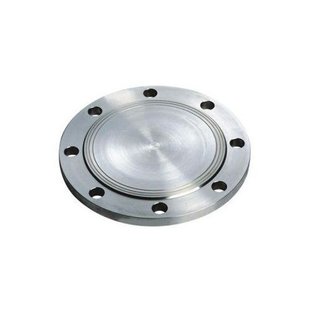
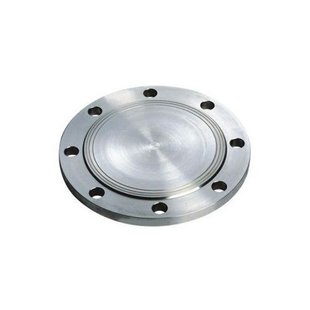
Steel blind flanges are solid flange components without a central bore. They are designed to completely close the end of a pipeline, nozzle, equipment connection or a separate section of a piping system.
A blind flange is installed against a matching flange using bolts or studs and an appropriate gasket. This type of connection provides reliable pipeline isolation while allowing the joint to be dismantled when required.
Steel blind flanges are widely used in industrial piping, water supply, heating and hot-water systems, pumping stations, power generation facilities, chemical and petrochemical plants, and process equipment.
Applications of steel blind flanges
Steel blind flanges are used for:
- completely closing a pipeline end;
- temporarily closing a spare pipeline section;
- isolating individual sections of a piping system;
- maintenance and repair operations;
- servicing pipeline equipment;
- pressure testing and commissioning;
- process equipment connections;
- industrial piping systems.
The flange is secured with bolts or studs through the dedicated mounting holes. Correct selection requires matching the nominal size, pressure rating, bolt pattern and sealing surface with the mating flange.
Main specifications
When selecting a steel blind flange, the following parameters should be considered:
- nominal diameter DN;
- nominal pressure PN;
- outside diameter;
- bolt circle diameter;
- bolt-hole diameter;
- number of bolt holes;
- flange thickness;
- facing or sealing surface;
- steel grade;
- manufacturing standard.
The actual dimensions depend on the selected DN, PN and applicable standard. Therefore, dimensions should always be checked against the relevant standard or technical drawing before installation.
Steel blind flanges according to EN 1092-1
EN 1092-1 is a widely used European standard for steel flanges. In Ukraine, it is adopted as DSTU EN 1092-1:2018, covering circular steel flanges for pipes, valves, fittings and accessories with designated PN pressure ratings.
Under EN 1092-1, blind flanges are designated as Type 05. Selection should take into account the DN, PN, flange facing, bolt pattern and compatibility with the mating flange.
Materials
Steel blind flanges can be manufactured from different grades of carbon steel, low-alloy steel and stainless or corrosion-resistant steels, depending on the design requirements.
The appropriate material should be selected according to the working medium, operating temperature, pressure, corrosion conditions and project specifications.
How to select a steel blind flange
Before ordering, determine:
- DN — nominal pipe diameter.
- PN — nominal pressure rating.
- Standard — for example EN 1092-1 or another applicable standard.
- Material — according to operating conditions.
- Sealing surface type.
- Bolt-hole pattern and dimensions.
- Suitable gasket and fastening components.
Correct matching of these parameters is essential for a reliable and leak-tight flange connection.
Buy steel blind flanges in Ukraine
«ТРУБОПРОВІДНІ СИСТЕМИ УКРАЇНИ» supplies pipeline valves, flanges and components for industrial and engineering systems.
When requesting a steel blind flange, it is recommended to specify the DN, PN, applicable standard, material and required quantity. A technical drawing or equipment specification can also be used to determine the exact flange configuration.
FAQ — Steel Blind Flanges
What is a steel blind flange?
A steel blind flange is a solid flange without a central bore. It is used to completely close a pipeline or a flanged equipment connection.
What are blind flanges used for?
They are used for pipeline isolation, temporary or permanent closure of piping sections, maintenance, repair and process equipment applications.
What is the difference between a blind flange and a flat welding flange?
A blind flange has no central opening and closes the pipeline. A flat welding flange has a central bore and is used to connect a pipe to another piping component.
What do DN and PN mean?
DN refers to the nominal diameter of the piping system. PN refers to the nominal pressure rating associated with the applicable flange standard.
How do I choose a steel blind flange?
Select the flange according to DN, PN, manufacturing standard, material, sealing surface, bolt pattern and the dimensions of the mating flange.
Does a blind flange require a gasket?
In most bolted flange connections, a suitable gasket is required to provide sealing. The gasket must be compatible with the medium, pressure, temperature and flange facing.
Can a blind flange be used for temporary pipeline isolation?
Yes. A bolted blind flange can be installed and removed when access to the pipeline section is required.
Which standard should be used for steel blind flanges?
The applicable standard depends on the project and piping system. EN 1092-1, adopted in Ukraine as DSTU EN 1092-1:2018, is one of the common standards for steel flanges.