




|
Quantity
|
Total
|
||
|
|
|||
Pipe Couplings
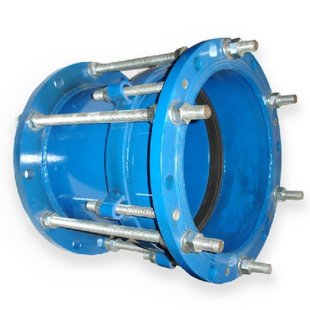
Pipe couplings are pipeline fittings designed to join separate pipe sections, connect compatible components, adapt different connection configurations or perform certain repair tasks. Depending on the design, a coupling can use a threaded, compression or other connection method specified for the particular fitting. Selecting a compatible coupling helps create a reliable pipe connection and simplifies installation and maintenance. Couplings are used in water supply, heating, water treatment and various industrial and engineering pipeline systems.
Main types of pipe couplings
The appropriate coupling design depends primarily on the pipe material and connection method. Threaded couplingsare used to join pipes and components with compatible threaded connections. Their practical advantage is the possibility of disassembly when maintenance or replacement is required.
Polypropylene couplings are designed for compatible polymer pipe systems and are installed according to the relevant joining technology. For polyethylene pipes, compression couplings are widely used where a mechanical connection is required without specialized welding equipment.
Reducing or transition couplings are used when different pipe sizes or connection configurations need to be integrated into one system. Repair couplings are intended for specific repair applications where a damaged pipe section needs to be restored without replacing the entire pipeline.
Materials and construction
The coupling material should be compatible with the pipe material and the operating conditions of the system. Depending on the application, couplings can be manufactured from steel, cast iron, polypropylene and other materials suitable for the particular pipeline design.
Steel couplings are used with compatible metal pipe systems where a mechanically robust connection is required. Cast iron couplings are suitable for systems designed for cast iron fittings. Polymer couplings are used with compatible plastic piping systems.
Material is only one selection factor. The connection type, pipe compatibility, operating medium and installation method should also be considered before ordering a fitting.
Applications of pipe couplings
Couplings are used in water supply, heating, heat distribution, water treatment and various industrial or process piping systems. They can be required both for new installations and for renovation, maintenance or repair of existing pipelines.
The correct type depends on the pipe and system design. Plastic piping requires compatible polymer or compression fittings, while metal pipe systems may require threaded or other suitable mechanical connections.
How to choose the right coupling
Before ordering, check the pipe material and size, connection type, fitting design and operating medium. For pressurized systems, the coupling should also be suitable for the operating conditions of the pipeline.
Nominal dimensions may be specified using DN, but the way dimensions are identified can vary between pipe and fitting types. For this reason, the safest approach is to select the coupling based on the actual pipe specifications and compatibility of the connection.
For contractors and procurement specialists, the required quantity and supply configuration are also important. If the correct fitting is difficult to identify, providing the pipe specifications and intended application allows a specialist to help determine the appropriate coupling.
Why order from Pipeline Systems of Ukraine
Pipeline Systems of Ukraine supplies components for pipeline and engineering systems and provides professional assistance with product selection and supply arrangements. The company works with professional customers as well as buyers who need components for pipeline installation and maintenance.
For project and bulk purchases, it is useful to confirm the required coupling type, quantity and compatibility before placing an order. This helps ensure that the selected fittings correspond to the actual pipeline requirements.
Popular sizes
Coupling dimensions depend on the particular construction and pipe system, so there is no single universal size range for the entire category. Common pipe connection sizes can include 15, 20, 25, 32, 40, 50, 63, 75, 90 and 110 mm, while the exact available size should always be checked for the selected coupling.
Choose a coupling according to the pipe material, dimensions and connection method. Contact Pipeline Systems of Ukraine to check compatibility, availability and pricing and to receive assistance with pipeline component selection.
FAQ — Frequently Asked Questions About Pipe Couplings
1. What is a pipe coupling used for?
A pipe coupling is used to connect two compatible pipe sections or integrate a pipe with another pipeline component. The exact application depends on the coupling design and the pipe system.
2. What is the difference between a threaded and compression coupling?
A threaded coupling connects components through matching threads and is suitable where a detachable mechanical connection is required. A compression coupling uses a mechanical clamping system to secure a compatible pipe.
3. Which coupling should be used with polyethylene pipe?
The fitting must be compatible with the specific polyethylene pipe and its dimensions. Compression couplings are commonly used for suitable polyethylene piping systems, but the final selection should be based on the pipe specifications and manufacturer requirements.
4. When is a reducing coupling required?
A reducing or transition coupling is used when two pipeline elements have different sizes or connection configurations. It provides a practical way to integrate the different sections into one pipeline.
5. What are repair couplings used for?
Repair couplings are designed for particular pipeline repair applications. Before installation, the coupling should be checked for compatibility with the damaged pipe material, dimensions and repair method.